
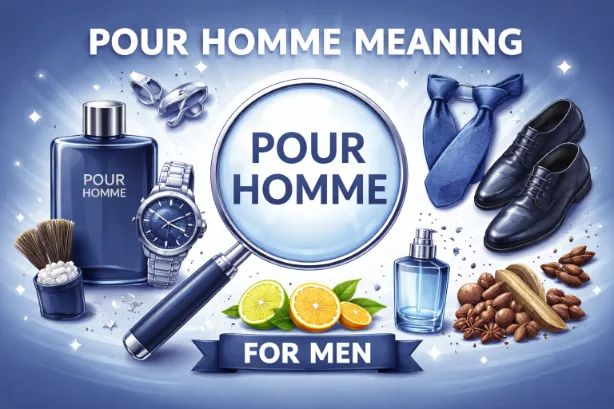
“Pour Homme” comes from the French language and translates directly to “for men” in English. This phrase appears widely on grooming, fashion, and fragrance products to show that the item targets a male audience. Brands place this label to communicate identity, style direction, and intended use.
Translation and Linguistic Breakdown
The phrase splits into two simple parts:
- Pour = for
- Homme = man
Together, the phrase forms a clear label: for men. The wording stays consistent across industries, making it easy to identify male-oriented products without confusion.
Where “Pour Homme” Appears Most
The phrase shows up across different product categories, especially those linked to personal style and grooming.
1. Fragrances and Perfumes
Perfume brands frequently use “Pour Homme” to distinguish men’s scents from women’s or unisex collections. These fragrances usually carry deeper, richer notes.
Common scent profiles:
- Woody tones (cedar, sandalwood)
- Spicy notes (pepper, cardamom)
- Fresh accords (citrus, aquatic elements)
- Musky or leathery bases
2. Clothing and Fashion Labels
Fashion houses use the term in collections designed for men. It signals masculine tailoring, structure, and styling direction.
Typical fashion traits:
- Structured fits
- Neutral or darker color palettes
- Minimal decorative elements
- Focus on functionality
3. Grooming and Skincare Products
Shaving creams, face washes, beard oils, and deodorants often carry this label. These products target male skin types and grooming habits.
Examples:
- Aftershave lotions
- Beard conditioners
- Men’s face cleansers
- Hair styling gels
“Pour Homme” vs “Pour Femme”
Brands often pair “Pour Homme” with “Pour Femme”, which means “for women.” This distinction helps customers choose products quickly.
Quick Comparison
| Term | Language Origin | Meaning in English | Target Audience |
|---|---|---|---|
| Pour Homme | French | For men | Male users |
| Pour Femme | French | For women | Female users |
This simple labeling system removes guesswork, especially in perfume stores where many bottles look similar.
Why Brands Prefer French Terms
French carries strong ties with luxury, elegance, and high fashion. Many global brands use French wording to create a refined image.
Reasons behind this choice:
- France has deep roots in perfume craftsmanship
- French terms sound sophisticated
- Consumers associate French with premium quality
- The fashion industry widely adopts French terminology
Using “Pour Homme” instantly adds a polished and upscale tone to a product.
Popular Examples of “Pour Homme” Products
Many global brands have released iconic items under this label. These products have shaped modern men’s grooming and fragrance trends.
Fragrance Examples
- Dior Sauvage Pour Homme
- Versace Pour Homme
- Bvlgari Pour Homme
These scents differ in composition, yet all carry the same core identity: masculine appeal.
Characteristics of “Pour Homme” Fragrances
Men’s fragrances marked with this label follow specific patterns in composition and performance.
Common Traits
- Stronger base notes for longer wear
- Balanced freshness with depth
- Subtle sweetness compared to women’s perfumes
- Clean yet bold finish
Fragrance Structure
Most scents follow a three-layer structure:
- Top notes: Fresh and light (citrus, herbs)
- Middle notes: Warm and spicy (lavender, cinnamon)
- Base notes: Deep and lasting (wood, musk, amber)
This layering creates a complete sensory experience from first spray to final dry-down.
Cultural Relevance of the Phrase
The phrase holds cultural value beyond translation. It represents a refined approach to masculinity shaped by European fashion and grooming traditions.
In many regions, people associate “Pour Homme” with:
- Classic elegance
- Clean grooming habits
- Confident style
- Attention to detail
The wording itself carries a sense of identity rather than just function.
How to Choose the Right “Pour Homme” Product
Selecting a product with this label requires attention to personal style, climate, and daily routine.
Factors to Consider
- Climate:
Light citrus scents suit warm weather, while woody notes fit cooler seasons. - Occasion:
Fresh fragrances work for daytime, deeper scents match evening settings. - Skin Type:
Oily skin holds fragrance longer, while dry skin may need reapplication. - Personal Preference:
Some prefer subtle scents, others choose bold profiles.
Simple Selection Guide
| Situation | Recommended Style |
|---|---|
| Office use | Fresh, light fragrance |
| Evening events | Warm, spicy tones |
| Casual outings | Clean, citrus scents |
| Winter season | Woody, musky blends |
Misconceptions About “Pour Homme”
Some assume that products labeled “Pour Homme” can only be used by men. This idea limits personal choice.
Reality Check
- Fragrance has no strict gender boundary
- Many scents suit anyone based on preference
- Modern trends embrace unisex usage
The label guides marketing, not personal rules.
Evolution of the Term in Modern Branding
While “Pour Homme” remains popular, some brands now use gender-neutral language. This shift reflects changing consumer behavior.
Still, the traditional label holds strong due to:
- Brand heritage
- Customer familiarity
- Clear product positioning
Many luxury houses maintain the phrase to preserve identity and legacy.
Practical Uses in Daily Life
People encounter this phrase in everyday shopping, especially in:
- Perfume stores
- Online marketplaces
- Clothing tags
- Grooming aisles
Recognizing the term helps shoppers make quicker and more confident decisions.
Styling and Identity Connection
“Pour Homme” connects deeply with personal image. It aligns with how a person presents themselves through scent, clothing, and grooming.
A well-chosen product can:
- Enhance confidence
- Leave a lasting impression
- Match personality and mood
- Complement overall appearance
This connection explains why many invest time in selecting the right fragrance or grooming item.
What does “Pour Homme” mean in simple words?
It means “for men” in French. Brands use it to label products designed for male consumers.
Can women use “Pour Homme” perfumes?
Yes. Fragrance depends on personal taste, not labels. Many women enjoy scents marketed for men.
Is “Pour Homme” always used for perfumes?
No. The phrase appears on clothing, grooming items, and other male-oriented products.
Why do luxury brands use French words?
French adds elegance and prestige. It also connects to the history of fashion and perfumery.
Does “Pour Homme” guarantee a strong fragrance?
Not always. Strength depends on formulation, not just labeling. Some scents stay light and fresh.