
Both Fupa and pooch describe fat placement in the lower abdomen, yet each term points to a separate area, texture, and visual pattern. Confusion leads to wrong workouts, diet plans that miss the target, and frustration with slow results. A precise distinction fixes that.
Fupa: Lower Abdominal Dat Below the Navel
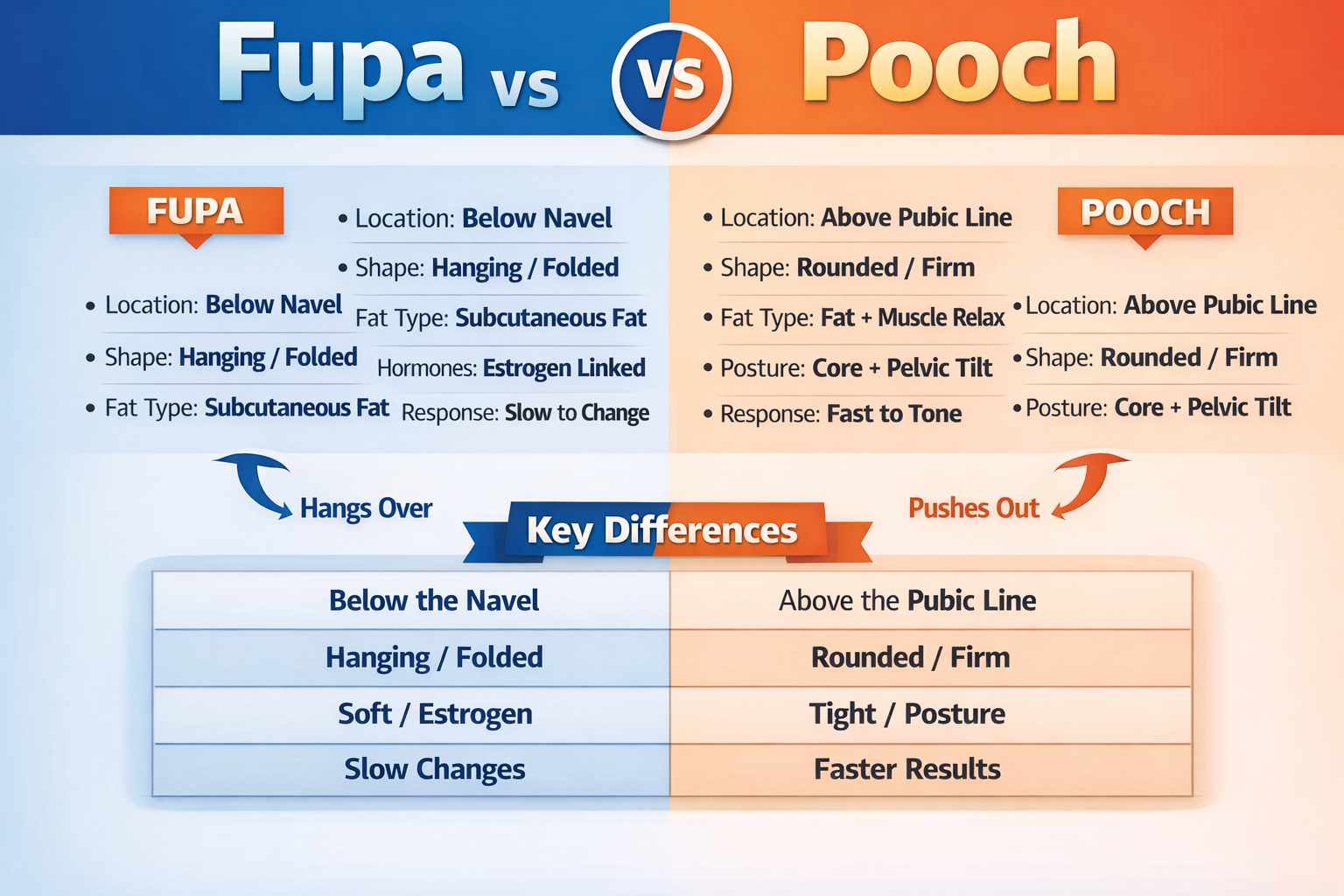
The fupa sits below the belly button, resting over the pubic region. Fat here hangs or folds forward, creating a soft pad that shows through fitted clothing. Hormonal shifts, childbirth, and long term fat storage shape this area more than surface-level bloating.
Physical Features
- Located under the navel, above the pubic bone
- Softer texture with a fold-like look
- Visible from the front and side
- Changes slowly with routine exercise
Contributors
- Estrogen dominance
- Pregnancy recovery
- Long periods of calorie surplus
- Limited lower-core engagement
Pooch: Upper Lower-Belly Protrusion
A pooch appears above the pubic line but below the navel, pushing outward rather than hanging down. Muscle relaxation, posture habits, and mild fat storage create this rounded shape. It looks firm compared to a fupa and reacts faster to training.
Identifying Factors
- Sits higher on the abdomen
- Rounded or dome-like shape
- More muscle-related than fat-heavy
- Responds well to core-focused routines
Leading Causes
- Weak transverse abdominis
- Pelvic tilt
- Postural strain from sitting
- Temporary weight fluctuation
Detailed Comparison
| Exact location | Below navel, above pubic bone | Below navel, above pubic line |
| Shape | Hanging or folding | Rounded, firm |
| Fat type | Subcutaneous fat | Fat + muscle relaxation |
| Exercise response | Slow | Faster |
| Hormone link | Strong | Mild |
Visual Clues that Separate Both
Small details help spot the difference without medical scans.
Checkpoints
- Lying flat: pooch flattens more than fupa
- Tight jeans: fupa spills downward, pooch pushes outward
- Pinch test: fupa grabs thicker tissue
- Core flex: pooch firms up quicker
Hormonal and Biological Roles
Fat storage patterns follow biology. Lower abdominal zones react to estrogen, cortisol, and insulin. A fupa shows stronger hormone sensitivity, while a pooch reflects muscular control and posture.
Hormone patterns
- Estrogen favors fat storage near reproductive organs
- Cortisol increases central fat retention
- Insulin resistance slows fat loss in lower zones
Exercise Response Differences
Training plans fail without targeting the right area. A pooch responds faster to focused exercise and posture based movement, while a fupa changes more slowly through consistent full body exercise that supports fat reduction.
Fupa Focused Movement
- Incline walking
- Resistance training for full body
- Slow, controlled leg raises
- Fat-loss routines with progressive overload
Pooch Exercise
- Dead bugs
- Hollow holds
- Pelvic tilt drills
- Posture correction exercises
Diet Influence on Each Area
Food choices affect fat storage style.
Helpful Nutrition Patterns
- Stable protein intake
- Fiber-rich meals
- Reduced refined sugars
- Balanced fat sources
A pooch shrinks faster through diet shifts. A fupa reacts slower, requiring patience and consistency.
Lifestyle Habits that Shape Results
Daily actions shape abdominal appearance more than single workouts.
Helpful habits
- Standing breaks during desk work
- Proper sleep timing
- Stress reduction routines
- Hydration consistency
Small posture fixes reduce pooch size within weeks, while a fupa needs longer-term habit alignment.
Medical and Cosmetic Options
Some seek clinical routes after lifestyle changes stall.
Non-surgical
- Body contouring devices
- Lymphatic massage
- Hormone balance therapy
Surgical
- Liposuction for localized fat
- Tummy tuck for loose tissue
Medical advice remains necessary before any procedure.
Practical Checklist for Identification
Use this quick guide at home.
Self Check
- Location under navel → fupa
- Rounded push above pubic line → pooch
- Soft fold → fupa
- Firm dome → pooch
Despite apparent similarity, fupa and pooch describe different lower belly patterns, not the same issue with two labels. Correct identification leads to proper action, realistic timelines, and better outcomes. This clarity saves energy, money, and frustration, exactly what most body change plans miss.