
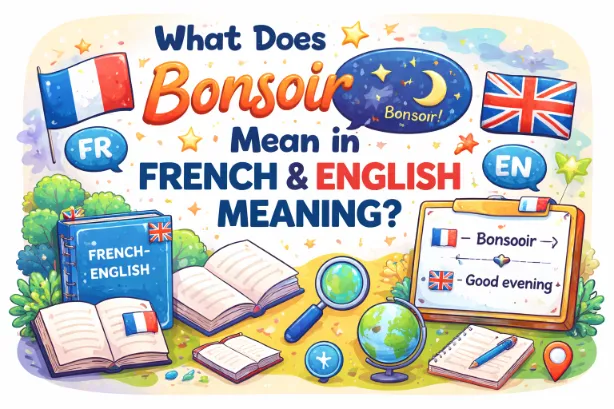
“Bonsoir” is a French greeting used in the evening hours. In English, it translates directly to “good evening.” This simple expression carries both politeness and cultural tone, making it a valuable phrase for daily communication in French-speaking regions.
Meaning of Bonsoir in English
“Bonsoir” combines two French elements:
- Bon → good
- Soir → evening
Together, the phrase forms a respectful way to greet someone after late afternoon hours. It serves the same purpose as saying “good evening” in English.
This greeting works in both formal and semi-formal situations. People use it while meeting someone, entering a shop, or starting a conversation during evening time.
When to Use Bonsoir
The timing of “bonsoir” depends on the part of the day. It replaces “bonjour” once the day shifts toward evening.
General usage timing:
- After 5:00 PM (varies slightly by region)
- During sunset hours
- Throughout the night until departure
Common situations:
- Greeting someone at dinner
- Entering a restaurant or hotel
- Meeting friends or colleagues in the evening
- Starting a formal conversation after daylight fades
Using the correct greeting shows respect and awareness of French etiquette.
Bonsoir vs Bonjour
Both “bonsoir” and “bonjour” serve as greetings, but they apply to different times of day.
| French Word | English Meaning | Time Used | Tone |
|---|---|---|---|
| Bonjour | Good morning / Good day | Morning to late afternoon | Friendly, standard |
| Bonsoir | Good evening | Evening to night | Polite, warm |
Switching between these two correctly helps conversations feel natural and culturally accurate.
Bonsoir as a Greeting and a Goodbye
“Bonsoir” works not only as a greeting but also as a polite way to say goodbye in the evening.
As a greeting:
- “Bonsoir, comment allez-vous ?”
→ Good evening, how are you?
As a farewell:
- “Bonsoir, à demain.”
→ Good evening, see you tomorrow.
This dual purpose makes the phrase practical in everyday speech.
Cultural Value of Bonsoir
French communication places strong emphasis on polite greetings. Saying “bonsoir” before starting any interaction shows courtesy.
In France and other French-speaking areas:
- People greet shopkeepers before asking questions
- Conversations rarely begin without a greeting
- Skipping this step may seem rude
This small phrase plays a large role in social interaction.
Pronunciation of Bonsoir
Correct pronunciation helps make communication smoother.
Phonetic breakdown:
- Bon → sounds like “bohn” (nasal tone)
- Soir → sounds like “swahr”
Full pronunciation:
- Bohn-swahr
Tips:
- Keep the “n” soft and nasal
- Blend the words smoothly
- Avoid pronouncing the “r” too harshly
Practicing aloud improves fluency over time.
Formal and Informal Use
“Bonsoir” fits both formal and informal settings. Tone and body language shape how it feels.
Formal settings:
- Business meetings
- Speaking to elders
- Customer service interactions
Informal settings:
- Friends gathering in the evening
- Casual conversations
- Family dinners
Adding phrases like “monsieur,” “madame,” or “mademoiselle” increases politeness.
Example:
- “Bonsoir, Madame” → Good evening, Ma’am
Phrases with Bonsoir
“Bonsoir” appears in many everyday expressions.
Useful examples:
- Bonsoir tout le monde → Good evening everyone
- Bonsoir, comment ça va ? → Good evening, how are you?
- Bonsoir, enchanté(e) → Good evening, nice to meet you
- Bonsoir et bienvenue → Good evening and welcome
These phrases help expand basic communication.
Situations Where Bonsoir Feels Appropriate
Here are typical scenarios where “bonsoir” fits perfectly:
- Entering a restaurant in the evening
- Greeting a neighbor after sunset
- Starting a phone call at night
- Meeting someone at an evening event
- Arriving at a hotel reception
Each use reinforces politeness and social awareness.
Difference Between Bonsoir and Bonne Soirée
These two phrases may look similar but carry different meanings.
| Phrase | English Meaning | Usage Type |
|---|---|---|
| Bonsoir | Good evening | Greeting / goodbye |
| Bonne soirée | Have a good evening | Farewell only |
Example:
- “Bonsoir !” → Greeting
- “Bonne soirée !” → Said while leaving
Using the correct phrase avoids confusion.
Why Bonsoir Matters in Language Learning
Learning “bonsoir” early helps build a strong foundation in French communication.
Benefits:
- Builds polite speaking habits
- Improves first impressions
- Supports smoother conversations
- Adds cultural awareness
Even a single word can shape how others respond during interaction.
Mistakes to Avoid
Many learners make small errors while using “bonsoir.” Avoid these to sound more natural.
Common mistakes:
- Using “bonjour” late in the evening
- Pronouncing it as “bon-soir” with a hard “r”
- Forgetting to greet before asking something
- Mixing it with “bonne soirée” incorrectly
Correct usage improves clarity and confidence.
Bonsoir in Written Communication
“Bonsoir” also appears in emails and messages.
Example email opening:
- “Bonsoir, j’espère que vous allez bien.”
→ Good evening, I hope you are doing well.
It adds a polite and respectful tone, especially in professional settings.
Quick Reference Guide
- Meaning: Good evening
- Language: French
- Usage: Greeting and farewell
- Time: Evening to night
- Tone: Polite and friendly
What does bonsoir mean in English?
It means “good evening.”
Can bonsoir be used as goodbye?
Yes, it works both as a greeting and a farewell in the evening.
What is the difference between bonsoir and bonne soirée?
“Bonsoir” greets someone, while “bonne soirée” wishes them a pleasant evening.
At what time should bonsoir be used?
After late afternoon, usually around 5 PM or later.
Is bonsoir formal or informal?
It suits both formal and casual situations.