
Fupa surgery is a cosmetic procedure design to reduce or remove excess fat and loose skin in the lower abdominal area above the pubic bone. This area commonly called the “FUPA” (fat upper pubic area) can remain prominent despite diet and exercise. Many patients pursue surgical correction to achieve a flatter lower abdomen, smoother clothing fit, and improved body confidence.
This treatment addresses stubborn fat deposits, sagging skin after weight loss, hormonal shifts, aging, or pregnancy. A skilled plastic surgeon evaluates skin elasticity, fat thickness, muscle tone, and overall body shape before recommending the right technique.
Types of Fupa Surgery Procedures
Several surgical options treat the lower abdominal bulge. The right method depends on fat volume, skin laxity, and muscle separation.
Liposuction
Liposuction removes excess fat through small incisions using a thin cannula. Surgeons suction out fat deposits to contour the area.
Best for:
- Good skin elasticity
- Localized fat without loose skin
- For ideal body weight
Advantages:
- Minimally invasive
- Shorter recovery
- Small scars
Limitations:
- Does not tighten loose skin
- Not suitable for severe sagging
Mini Tummy Tuck (Mini Abdominoplasty)
A mini tummy tuck removes excess skin and tightens the lower abdominal area. Surgeons place a small incision above the pubic region.
Best for:
- Mild to moderate skin laxity
- Lower belly pouch
- Post-pregnancy loose skin
Advantages:
- Skin tightening
- Improved contour
- Long-lasting results
Limitations:
- Slightly longer recovery than liposuction
- Visible incision line (low on bikini line)
Full Tummy Tuck (Abdominoplasty)
A full tummy tuck removes excess skin and fat from the entire abdomen and repairs separated abdominal muscles.
Best for:
- Severe sagging
- Muscle separation (diastasis recti)
- Major weight loss
Advantages:
- Comprehensive contour improvement
- Muscle tightening
- Dramatic transformation
Limitations:
- Longer downtime
- Larger scar
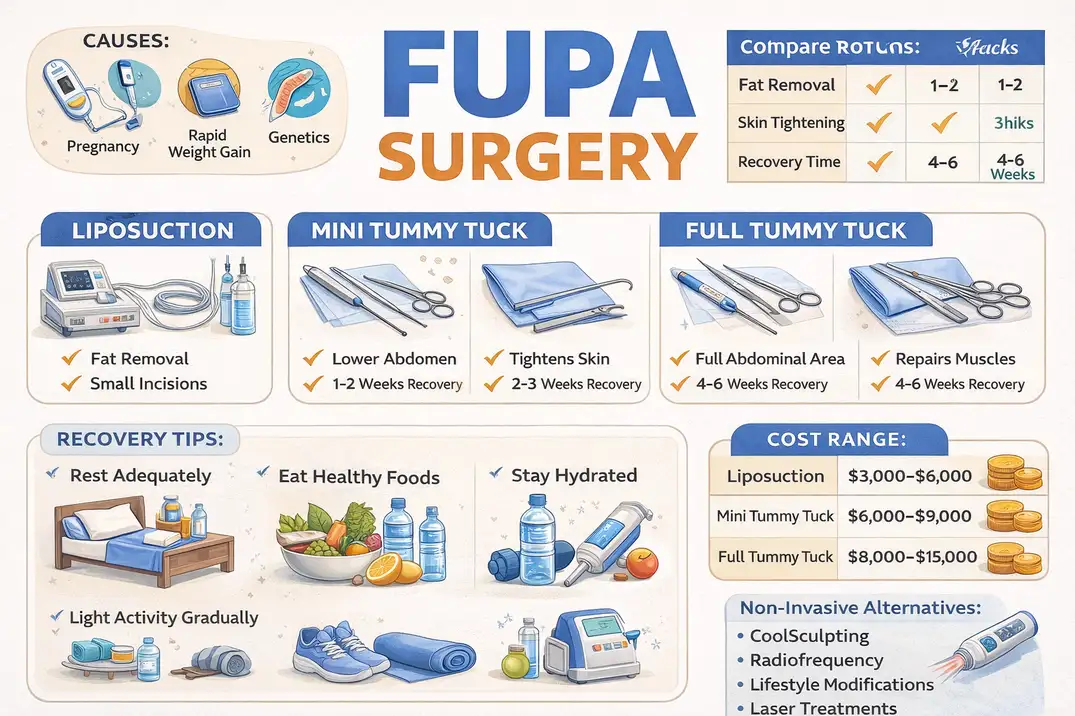
All Fupa Surgery Options
| Procedure | Removes Fat | Tightens Skin | Muscle Repair | Recovery Time | Best For |
| Liposuction | Yes | No | No | 1–2 weeks | Mild fat |
| Mini Tummy Tuck | Yes | Yes | Limited | 2–4 weeks | Moderate sagging |
| Full Tummy Tuck | Yes | Yes | Yes | 4–6 weeks | Severe laxity |
This table helps clarify which procedure matches different body conditions.
Who Is a Good Candidate?
A surgeon evaluates overall health, expectations, and lifestyle habits.
Ideal candidates:
- Stable body weight
- Non-smoker
- Realistic expectations
- Good general health
- Persistent lower abdominal bulge
Candidates should maintain weight stability before surgery. Weight fluctuations can affect long-term results.
Fupa Surgery Procedure Step by Step
Most procedures follow a structured surgical plan:
- Consultation and body assessment
- Pre-operative medical clearance
- Marking of treatment area
- Anesthesia administration
- Fat removal and/or skin excision
- Suturing and compression garment placement
Surgery duration ranges from 1 to 4 hours depending on complexity.
Recovery Timeline
Recovery varies based on the procedure performed.
First Week:
- Swelling and bruising
- Mild to moderate discomfort
- Compression garment worn daily
Weeks 2–3:
- Light activities resume
- Swelling gradually decreases
Weeks 4–6:
- Return to gym workouts
- Visible contour improvement
Full healing may take several months. Surgeons recommend avoiding heavy lifting during early recovery.
Risks and Possible Complications
All surgical procedures carry risks. Selecting a board-certified plastic surgeon reduces complications.
Possible risks:
- Infection
- Bleeding
- Scarring
- Seroma (fluid accumulation)
- Numbness
- Irregular contour
Proper aftercare and follow-up visits improve healing outcomes.
Cost of Fupa Surgery
Prices vary by country, surgeon expertise, and clinic reputation.
Average cost range:
- Liposuction: $3,000 – $6,000
- Mini tummy tuck: $6,000 – $9,000
- Full tummy tuck: $8,000 – $15,000
Costs may cover:
- Surgeon fee
- Anesthesia
- Operating facility
- Compression garments
- Post-surgery checkups
Insurance rarely covers cosmetic abdominal contouring unless medically necessary.
Fupa Surgery Before and After Expectations
Patients usually notice:
- Flatter lower abdomen
- Better clothing fit
- Improved body silhouette
- Reduced skin folds
Swelling initially hides final results. Most individuals see a refined shape within 8–12 weeks.
Maintaining a balanced diet and regular exercise helps preserve outcomes.
Non Surgical Alternatives
Some individuals prefer non-invasive treatments before surgery.
Options:
- CoolSculpting (fat freezing)
- Radiofrequency skin tightening
- Laser fat reduction
- Targeted strength training
These treatments offer subtle improvements and require multiple sessions. They do not remove large skin folds.
Emotional and Physical Benefits
Body contour procedures affect both physical appearance and mental well-being.
Patients frequently report:
- Increased confidence
- Comfort in fitted clothing
- Reduced skin irritation
- Improved posture
A flatter lower abdomen can restore confidence after childbirth or major weight loss.
How to Choose the Right Surgeon
Selecting a qualified professional directly affects surgical success.
Look for:
- Board certification in plastic surgery
- Before-and-after photo gallery
- Transparent pricing
- Clear communication
- Positive patient reviews
A thorough consultation should address expectations, scarring, recovery time, and long-term care.
Is Fupa surgery painful?
Discomfort occurs during recovery, though surgeons prescribe medication to manage it.
Will scars be visible?
Incisions remain low along the bikini line and fade over time.
How long do results last?
Results last many years with stable weight.
Can men get Fupa surgery?
Yes. Men pursue liposuction or abdominoplasty for lower abdominal contouring.
Is pregnancy safe after surgery?
Pregnancy remains possible, though it may stretch the abdominal area again.
Options of fupa surgery range from liposuction to full abdominoplasty, depending on fat volume and skin condition. A consultation with a qualified plastic surgeon clarifies the most suitable approach and sets realistic expectations.
With proper planning, recovery care, and healthy habits, patients achieve a smoother lower abdomen and improved body contour that aligns with personal aesthetic goals.