
Exfil refers to the act of removing something from a location, usually with intent and control. The word comes from “exfiltration,” a term widely used in cybersecurity, military communication, and modern gaming culture. It describes a process where something valuable such as data, personnel, or resources gets taken out from a place, often without drawing attention.
In practical usage, the meaning shifts slightly depending on context. But in digital systems, it signals unauthorized data transfer. In tactical operations, it refers to extracting individuals safely. In gaming, it describes reaching an exit point after completing objectives.
Simple Definition of Exfil
Exfil can be explained in simple terms as the removal of something from a specific place. The action usually involves planning, timing, and a clear goal. In many cases, it happens quietly to avoid detection.
- Taking something out
- Done secretly or strategically
- Used in technical and casual language
This simple idea remains consistent across all fields where the term appears.
Origin of the Term Exfil
The term traces back to “exfiltration,” which combines the prefix “ex” meaning out, and “filtration,” meaning passing through a medium. The word first appeared in military communication, where teams used it to describe extraction missions.
Over time, cybersecurity experts adopted the term to describe unauthorized data removal. Later, gaming communities popularized the shorter version “exfil,” making it part of everyday digital slang.
Exfil in Cybersecurity
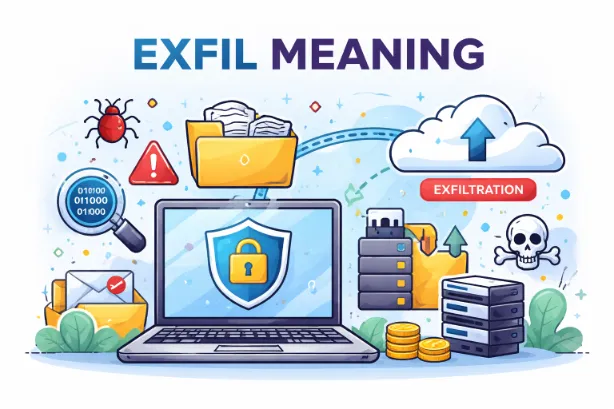
In cybersecurity, exfil refers to the unauthorized movement of data from a secure system to an external destination. This action usually happens without the owner’s knowledge and can lead to serious consequences.
Hackers use different techniques to collect sensitive information and move it outside the network. This stolen data may contain personal details, financial records, or confidential business files. Because of the hidden nature of exfiltration, organizations must stay alert and monitor system activity closely.
Types of Data Exfiltration
Different kinds of sensitive information become targets during exfil attempts. Attackers focus on data that holds value or can be sold or misused.
- Personal data such as emails and passwords
- Financial records and banking details
- Company secrets and internal documents
- Customer databases
Each type carries risks that can damage both individuals and organizations.
Signs of Exfiltration Activity
Unusual system behavior often signals possible exfiltration. Security teams track patterns that deviate from normal activity to detect threats early.
Sudden spikes in data transfer, unknown external connections, or file access during odd hours can indicate suspicious actions. Monitoring tools help identify these warning signs before serious damage occurs.
- Unexpected data transfers
- Large files moving outside the network
- Unknown devices connecting
- Irregular login patterns
Early detection reduces potential losses and limits exposure.
Exfil in Military Context
In military operations, exfil refers to the safe removal of personnel from a location, especially dangerous or hostile environments. This process requires precise coordination and timing.
Teams plan exfil missions carefully to avoid detection and secure safe passage. Helicopters, ground vehicles, or covert routes may be used depending on the situation. The goal always remains the same—bringing individuals out safely after completing their task.
Such operations demand discipline, communication, and strong execution.
Exfil in Gaming
Gaming communities widely use the term exfil, especially in extraction-based games. Players must reach designated exit points to complete missions and secure rewards.
This concept adds tension and excitement, as players must survive until they successfully leave the map. Losing before reaching the exfil point means losing collected items.
The term has become part of everyday gamer vocabulary, often used casually during gameplay sessions.
Exfil vs Infil: Key Differences
Exfil and infiltration represent opposite actions. One focuses on removal, while the other focuses on entry.
| Term | Meaning | Direction | Example Use Case |
|---|---|---|---|
| Exfil | Removal from a location | Outward | Extracting data or personnel |
| Infil | Secret entry into a place | Inward | Entering a secure system |
This contrast helps clarify how each term functions in different scenarios.
Why Exfil Matters in Cybersecurity
Data exfiltration creates serious risks for businesses and individuals. Loss of sensitive information can lead to financial damage and legal complications.
Organizations must protect their systems against such threats. Attackers constantly search for vulnerabilities, making security an ongoing effort rather than a one-time solution.
Strong protection measures reduce the chances of data leaving the system without authorization.
How Data Exfiltration Happens
Attackers rely on various techniques to remove data from systems. These methods depend on the target’s weaknesses and security gaps.
Some attackers use malware to automate the process, while others rely on manual actions such as copying files. Cloud services and email channels also serve as common paths for data transfer.
- Email transfers
- Cloud uploads
- USB storage devices
- Network-based extraction methods
Each method presents different challenges for detection and prevention.
Prevention Methods
Preventing exfiltration requires a layered approach. Organizations combine technology with human awareness to reduce risks.
Security tools monitor system behavior, while access controls limit who can view or transfer data. Employee training also plays a major role in preventing accidental leaks.
- Encryption for sensitive data
- Access restrictions
- Monitoring systems
- Security awareness programs
These steps create a strong defense against unauthorized data movement.
Real-World Example of Exfil
A common example involves an employee copying company data onto a personal device and transferring it outside the organization. Even without external hackers, this action still counts as exfiltration.
Such cases highlight the role of insider threats. Not all risks come from outside sources; internal misuse can also lead to data loss.
Organizations must monitor both internal and external activity to stay protected.
Exfil in Everyday Language
The term exfil has moved beyond technical fields into casual speech. People use it informally to describe leaving a place quickly or strategically.
Phrases like “time to exfil” or “we need to exfil now” appear in conversations, especially among gamers and tech enthusiasts. This shift shows how specialized terms can enter everyday language over time.
Advantages and Risks
Exfil can serve both positive and negative purposes depending on context. In controlled situations, it supports safety and efficiency. In malicious scenarios, it creates serious threats.
Advantages
- Safe evacuation during emergencies
- Planned withdrawal from risky areas
- Secure data transfer under authorization
Risks
- Data theft
- Privacy breaches
- Corporate espionage
The difference lies in intent and execution.
Exfil in Modern Digital Security
Modern systems face increasing threats related to data exfiltration. Attackers use advanced tools to bypass traditional defenses.
Ransomware attacks now combine encryption with data theft, increasing pressure on victims. Cloud environments also create new risks, as large volumes of data move between systems.
Security strategies must evolve to address these changing patterns.
| Aspect | Explanation |
|---|---|
| Meaning | Removal or extraction |
| Full Term | Exfiltration |
| Usage Areas | Cybersecurity, military, gaming |
| Risk Level | High in digital systems |
| Purpose | Data theft or safe extraction |
This table provides a quick overview of the term and its applications.
What does exfil mean in simple words?
Exfil means taking something out of a place, usually in a planned or hidden way.
What is data exfiltration?
It refers to transferring data from a system without permission, often by attackers or insiders.
Is exfil always illegal?
No. In military operations, exfil can refer to safe evacuation. In cybersecurity, unauthorized exfil becomes illegal.
What is exfil in gaming?
It refers to reaching an exit point to complete a mission and secure rewards.
How can companies reduce exfil risks?
They use monitoring tools, encryption, access control, and staff training to limit threats.
What is the difference between exfil and infiltration?
Exfil means removal, while infiltration means entering a place secretly.