
The Fupa vs Gut appears simple, yet the difference matters for body shape, fat distribution, clothing fit, and health focus. Both describe fat accumulation in the abdominal region, but the location, causes, and solutions differ. Clarity helps set realistic goals instead of chasing random workouts or diet trends.
First, discuss FUPA as excess fat that sits below the belly button and above the pubic bone. This area feels soft and localized rather than evenly distributed across the abdomen.
Characteristics of a FUPA:
- Located in the lower abdominal pouch area
- Can remain even after general weight loss
- More noticeable in tight clothing
- Sometimes linked to pregnancy or C-section recovery
- May relate to hormonal shifts
Both men and women can develop a FUPA, though it appears more frequently in women due to hormonal storage patterns.
What Is a Gut?
A “gut” is a fat stored in the mid and upper abdominal region. It can appear as a protruding stomach and may feel firm or rounded.
There are two main types of abdominal fat behind a gut:
- Subcutaneous fat – sits under the skin
- Visceral fat – wraps around internal organs
Visceral fat carries higher health risks because it affects metabolic function and inflammation levels.
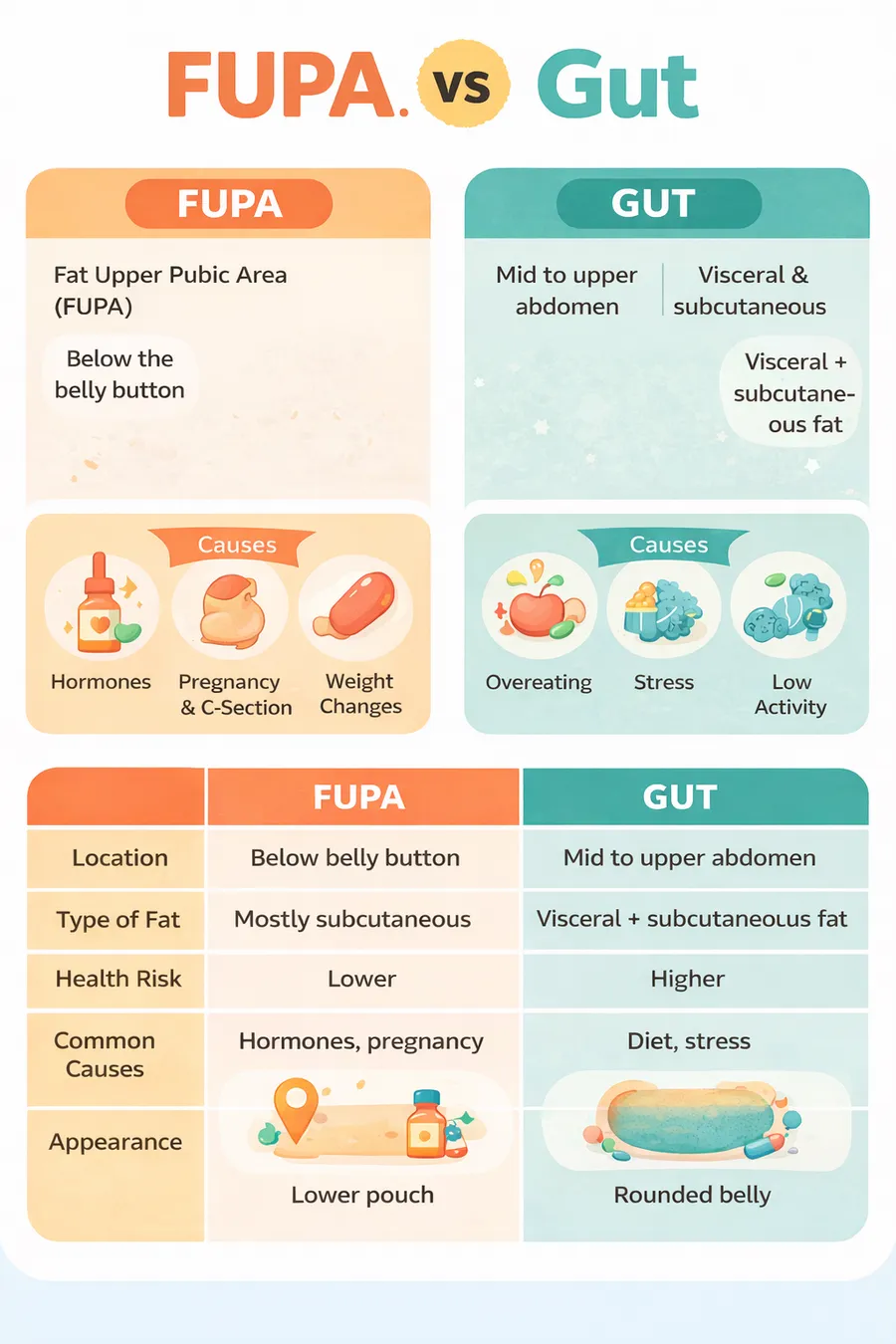
Fupa vs Gut: Major Differences
| FUPA | Gut | |
| Location | Lower abdomen, above pubic bone | Mid to upper abdomen |
| Type of Fat | Mostly subcutaneous | Subcutaneous + visceral |
| Health Risk | Lower direct metabolic risk | Higher risk if visceral fat is present |
| Common Causes | Hormones, pregnancy, weight fluctuation | Diet, inactivity, stress |
| Appearance | Lower pouch | Rounded or firm belly |
The distinction helps determine whether the concern is mostly cosmetic or health-related.
Causes of a FUPA
A FUPA rarely develops from one single factor. Multiple triggers usually combine.
Hormonal Shifts
Estrogen levels influence fat storage in the lower abdomen. Hormonal birth control, pregnancy, and menopause may change distribution patterns.
Pregnancy and C-Section
Skin stretching and muscle separation (diastasis recti) can leave a lower abdominal pouch even after weight loss.
Rapid Weight Gain or Loss
Skin elasticity varies from person to person. Rapid changes may leave loose tissue in the lower region.
Genetics
Some bodies store fat lower rather than centrally.
Factors Behind Gut
A gut usually develops through metabolic and lifestyle patterns.
High-Calorie Intake
Frequent processed foods, sugar-heavy meals, and refined carbohydrates promote abdominal storage.
Chronic Stress
Elevated cortisol levels encourage belly fat accumulation.
Low Activity Levels
Sedentary habits reduce calorie expenditure and muscle tone.
Health Perspective: Fupa vs Gut
A FUPA mainly affects body contour. A gut, especially one driven by visceral fat, connects with broader health risks.
Potential risks linked to excess visceral fat:
- Type 2 diabetes
- Cardiovascular disease
- High blood pressure
- Insulin resistance
- Inflammatory conditions
Lower abdominal fat alone does not carry the same metabolic burden unless overall body fat percentage remains high.
How to Identify What You Have
A simple visual and physical check helps differentiate.
Signs it may be a FUPA:
- Pouch sits lower than belly button
- Upper abdomen appears relatively flat
- Fat feels soft and pinchable
Signs it may be a Gut:
- Entire abdomen protrudes
- Upper stomach rounds outward
- Waistline expands evenly
- Belly may feel firm
For medical clarity, a DEXA scan or body composition test provides precise fat distribution data.
Can You Target a FUPA Specifically?
Spot reduction remains a myth. The body loses fat systemically, not selectively. That said, strengthening lower abdominal muscles improves appearance and tightness.
Helpful Exercises:
- Leg raises
- Reverse crunches
- Glute bridges
- Pelvic tilts
- Planks
Muscle tone tightens the region and improves posture, which reduces the lower pouch appearance.
Reducing a Gut Effectively
Gut reduction focuses on overall fat loss plus metabolic balance.
Diet Adjustments
- Increase protein intake
- Reduce refined carbs
- Limit sugary beverages
- Add fiber-rich vegetables
- Control portion sizes
Strength Training
Resistance training builds muscle mass, which raises resting metabolic rate.
Cardio Sessions
Walking, cycling, or interval training help burn calories consistently.
Sleep and Stress Control
Poor sleep raises cortisol. Seven to nine hours supports fat regulation.
Role of Hormones in Fupa and Gut
Hormones strongly influence fat placement.
| Hormone | Effect on Fat Storage |
| Estrogen | Encourages lower-body and lower-abdominal storage |
| Cortisol | Promotes central belly fat |
| Insulin | Drives fat storage after high-carb intake |
| Testosterone | Lower levels link with abdominal fat gain |
Balancing lifestyle factors supports hormone regulation naturally.
Posture and Muscle Structure
Weak core muscles exaggerate both conditions. Anterior pelvic tilt pushes the lower abdomen outward, making a FUPA appear larger. Slouching emphasizes a gut.
Corrective actions:
- Core strengthening
- Hip flexor stretches
- Glute activation
- Upright sitting habits
Postural correction alone can visually reduce abdominal protrusion within weeks.
Nutrition Comparison Strategy
| Goal | Best Approach |
| Lower Ab Fat Tightening | Moderate calorie deficit + strength training |
| Visceral Fat Reduction | Calorie control + low sugar + cardio |
| Hormone Support | Sleep routine + stress reduction |
| Skin Elasticity | Hydration + protein intake |
No crash diet provides long-term results. Sustainable habits outperform extreme restriction.
Psychological Angle
Lower abdominal fat can affect confidence due to clothing fit and social standards. Central belly fat can create anxiety around long-term health.
Balanced mindset helps:
- Track body composition rather than scale weight alone
- Focus on strength gains
- Measure waist circumference monthly
- Celebrate consistency
Progress shows through discipline rather than instant change.
Body Composition Over Scale
Two individuals may weigh the same yet carry fat differently. Waist-to-hip ratio provides better insight than total weight.
Healthy waist guidelines:
- Men: below 40 inches
- Women: below 35 inches
Numbers above these ranges increase metabolic risk.
Final Comparison Recap
| FUPA | Gut | |
| Cosmetic Concern | Higher | Moderate |
| Health Risk | Lower | Higher (visceral type) |
| Hormone Influence | Strong | Strong |
| Pregnancy Link | Yes | No |
| Stress Link | Mild | Strong |
Either FUPA or gut focuses on fat placement rather than personal failure. The lower pouch and central belly respond differently to hormones, lifestyle, and genetics. A clear approach that combines strength work, calorie awareness, and posture correction delivers steady progress. Focus on sustainable routines, track measurable data, and allow time for visible changes.