
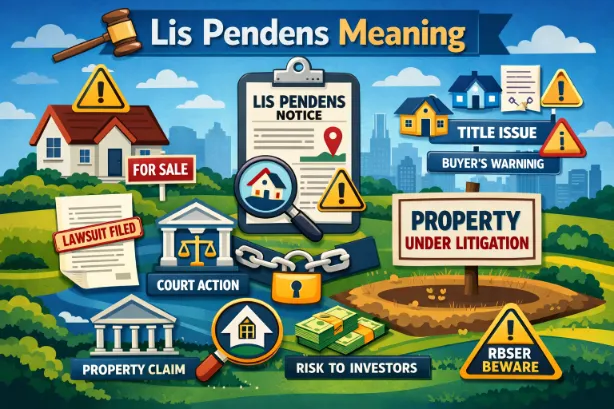
Lis pendens refers to a formal notice recorded in public land records that signals an ongoing legal dispute connected to a specific property. The phrase comes from Latin, meaning “pending lawsuit.” Once recorded, it alerts buyers, lenders, and other parties that ownership or rights tied to that property face a legal challenge.
This notice does not transfer ownership or prove guilt. It simply warns that a court case may affect the title or use of the property.
How Lis Pendens Works in Real Estate
A lis pendens filing connects a lawsuit directly to a property. The moment it appears in public records, anyone searching the title sees that dispute.
Here’s how the process works:
- A lawsuit gets filed involving property ownership or rights
- The plaintiff records a lis pendens in county records
- The notice becomes part of the property’s title history
- Potential buyers or lenders see the legal risk
- The property becomes difficult to sell or refinance
This system protects buyers from unknowingly purchasing disputed property.
Legal Purpose Behind Lis Pendens
Lis pendens serves as a warning mechanism. It prevents property transfers that could complicate court decisions later.
Main purposes:
- Alerts third parties about legal claims
- Protects plaintiff’s interest in the property
- Preserves court authority over disputed assets
- Discourages fraudulent sales during litigation
Without this notice, a property owner could sell the asset during a lawsuit, creating confusion and unfair outcomes.
Common Situations Where Lis Pendens Appears
Lis pendens filings appear in several property-related disputes. Courts allow them only in cases tied directly to real estate rights.
Common situations:
- Ownership disputes between parties
- Divorce cases involving shared property
- Foreclosure proceedings by lenders
- Boundary or easement disagreements
- Breach of contract in property sales
Each scenario involves a claim that could change who controls the property.
Effects on Property Owners
A lis pendens filing creates immediate challenges for property owners. It does not remove ownership, but it limits flexibility.
Key effects:
- Selling becomes extremely difficult
- Buyers hesitate due to legal uncertainty
- Mortgage refinancing faces rejection
- Property value may drop temporarily
- Legal pressure increases on the owner
Most buyers avoid properties with active disputes, leading to delays and financial strain.
Effects on Buyers and Investors
For buyers, lis pendens acts as a warning sign. It signals that purchasing the property carries risk.
Buyers should note:
- Ownership rights may change after court ruling
- Title insurance may not cover disputes
- Financing options become limited
- Legal costs may arise after purchase
Investors sometimes target such properties at lower prices, but they accept higher risk.
Lis Pendens vs. Lien
Many people confuse lis pendens with a lien, but they serve different roles.
| Feature | Lis Pendens | Lien |
|---|---|---|
| Purpose | Notice of lawsuit | Claim for unpaid debt |
| Ownership Change | No | No (but may lead to seizure) |
| Financial Claim | No direct claim | Yes, tied to money owed |
| Impact on Sale | Creates hesitation | Blocks sale until debt clears |
| Legal Nature | Warning notice | Enforceable financial right |
A lien demands payment, while lis pendens simply signals a dispute.
Filing a Lis Pendens
Filing requires strict legal steps. Courts expect accuracy and valid claims.
Basic steps:
- File a lawsuit connected to the property
- Prepare the lis pendens document
- Record it with the county recorder’s office
- Notify involved parties
The document must clearly describe the property and reference the lawsuit.
Improper filing can lead to penalties or dismissal.
Removing a Lis Pendens
A lis pendens does not stay forever. Several paths exist for removal.
Common methods:
- Court dismisses the lawsuit
- Parties reach a settlement
- Judge orders removal due to weak claims
- Property dispute resolves fully
Property owners may also challenge the filing in court. Judges can cancel it if it lacks merit.
Duration of Lis Pendens
The notice stays active as long as the lawsuit remains unresolved. It does not expire automatically in most cases.
Factors affecting duration:
- Complexity of the legal case
- Court delays
- Settlement negotiations
- Appeals process
Some cases take months, while others stretch for years.
Risks of Wrongful Filing
Filing lis pendens without proper grounds can backfire. Courts treat misuse seriously.
Possible consequences:
- Financial penalties
- Legal damages for property owner
- Removal of the notice
- Loss of credibility in court
A false filing can harm property owners unfairly, so courts require valid claims tied to property rights.
Role in Foreclosure Cases
Lis pendens frequently appears in foreclosure actions. Lenders use it to notify the public about pending claims.
In foreclosure:
- Lender files lawsuit against borrower
- Lis pendens alerts buyers about default
- Property sale becomes restricted
- Court decides final outcome
This step protects lenders from property transfers during legal proceedings.
Practical Example
Imagine a buyer signs a contract to purchase a home. Later, the seller backs out and attempts to sell to someone else. The original buyer files a lawsuit and records a lis pendens.
Now:
- New buyers see the dispute
- Title companies flag the issue
- Sale cannot proceed easily
- Court decides who has the rightful claim
This protects the first buyer’s contractual rights.
Advantages and Disadvantages
Advantages
- Protects legal rights tied to property
- Prevents unfair property transfers
- Alerts buyers about disputes
- Supports transparency in real estate
Disadvantages
- Creates delays in property transactions
- Affects property value temporarily
- Can be misused in rare cases
- Leads to legal expenses
Both sides experience pressure until resolution.
How to Handle a Property with Lis Pendens
For property owners:
- Consult a real estate attorney immediately
- Review the legal claim carefully
- Respond quickly in court
- Consider settlement options
For buyers:
- Conduct a title search before purchase
- Avoid high-risk transactions
- Seek legal advice before proceeding
Taking early action reduces complications.
Lis Pendens in Different Countries
While the concept remains similar globally, legal procedures vary by region.
- United States: Common in property disputes and foreclosure
- United Kingdom: Similar notices exist under different terms
- Canada: Registered as a “certificate of pending litigation”
- Australia: Known as caveat notices
Each system serves the same goal warning others about legal claims tied to property.
What does lis pendens mean in simple terms?
It signals that a property faces a legal dispute, and ownership or rights may change after court proceedings.
Can a property be sold during lis pendens?
Technically yes, but buyers rarely proceed due to legal risk. Most lenders also avoid financing such deals.
Does lis pendens affect credit score?
No direct effect on credit score. However, related legal or financial issues may indirectly affect finances.
How long does lis pendens stay on record?
It remains active until the lawsuit ends or a court removes it.
Can someone file lis pendens without a lawsuit?
No. A valid lawsuit tied to property rights must exist before filing.
Is lis pendens public record?
Yes. Anyone can access it through county or land registry records.
Can lis pendens be challenged?
Yes. Property owners can request court review and removal if the claim lacks proper legal basis.