
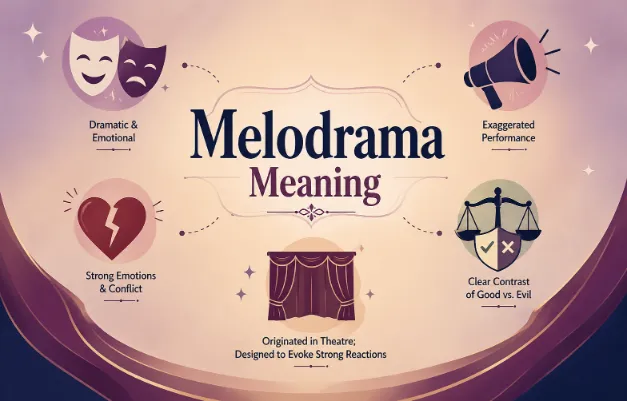
Melodrama meaning refers to a dramatic style that presents exaggerated emotions, intense conflict, and clear distinctions between heroes and villains. The term appears in literature, theater, film, television, and everyday speech. People use it to describe dramatic performances, emotional reactions, and plots filled with suspense, betrayal, romance, or tragedy.
In simple terms, melodrama focuses on emotional intensity. Characters may face heartbreaking situations, shocking betrayals, sudden twists, or impossible choices. The purpose is to make audiences feel deeply connected to what happens on screen, stage, or in a book.
Melodrama Definition
The word melodrama comes from two roots:
| Word | Origin | Meaning |
|---|---|---|
| Melo | Greek melos | Music |
| Drama | Greek dran | Action or play |
Originally, melodrama described theatrical performances where spoken dialogue appeared alongside dramatic music. The music helped strengthen emotional scenes and made the audience feel tension, sadness, fear, or excitement.
Modern dictionaries describe melodrama as:
- A dramatic work with exaggerated emotions
- A plot filled with sensational events
- Entertainment that shows clear moral conflicts
- Behavior that seems overly emotional in real life
For example:
“The movie was full of melodrama with secret affairs, family feuds, and dramatic courtroom scenes.”
In daily conversation:
“Stop the melodrama and tell me what actually happened.”
Here, the term suggests someone may be overreacting.
How Melodrama Started
Melodrama became popular in Europe during the late 18th century and early 19th century. Theater productions used background music to intensify emotional scenes.
Jean-Jacques Rousseau helped shape early melodramatic performance through his work Pygmalion, which used spoken words and musical accompaniment.
During the 1800s, melodrama became highly successful in:
- France
- England
- Germany
- United States
Theaters presented stories about:
- Lost children
- Evil landlords
- Wrongful imprisonment
- Family secrets
- Romantic betrayal
- Sudden inheritance disputes
Audiences loved these productions because they were emotional and easy to follow.
Main Characteristics of Melodrama
Melodrama has distinct traits that separate it from realistic drama.
| Characteristic | Description |
|---|---|
| Exaggerated emotions | Characters cry, shout, celebrate, or suffer intensely |
| Clear heroes and villains | Good and bad characters remain obvious |
| Dramatic twists | Sudden revelations change everything |
| Moral conflict | Good usually defeats evil |
| Emotional storytelling | Designed to create strong reactions |
| Suspense | Keeps viewers waiting for the next twist |
These features make melodrama highly entertaining for many audiences.
Melodrama in Literature
Many classic novels use melodramatic elements.
Oliver Twist presents cruel villains, innocent children, and dramatic hardship.
Wuthering Heights contains emotional obsession, revenge, and destructive relationships.
Uncle Tom’s Cabin also uses emotional scenes to connect readers with moral struggles.
Writers used melodrama to create unforgettable emotional experiences.
In Movies
Cinema adopted melodrama quickly because visual storytelling works well with emotional scenes.
Popular melodramatic films feature:
- Love triangles
- Family betrayal
- Revenge plots
- Illness tragedies
- Social class conflict
Examples:
Titanic combines romance, tragedy, sacrifice, and disaster.
The Notebook focuses on emotional romance and heartbreak.
Gone with the Wind presents war, romance, and personal conflict.
These films became memorable because audiences connected with emotional moments.
Melodrama in Television
Soap operas heavily rely on melodrama.
Popular examples:
- Secret twins
- Sudden marriages
- Betrayals
- Family scandals
- Memory loss
- Revenge plans
The Young and the Restless and General Hospital are famous examples.
Modern streaming shows also use melodramatic storytelling to keep viewers engaged.
| Drama | Melodrama |
|---|---|
| More realistic emotions | Strong exaggerated emotions |
| Complex characters | Clear good vs bad roles |
| Subtle storytelling | Intense dramatic twists |
| Real-life situations | Sensational situations |
A family disagreement may appear as drama.
A family disagreement involving secret affairs, hidden identities, and dramatic confrontations may feel melodramatic.
Why People Enjoy Melodrama
Melodrama remains popular because it creates strong emotional reactions.
People enjoy:
- Romance
- Suspense
- Revenge plots
- Emotional endings
- Unexpected revelations
These stories can feel exciting because viewers become emotionally invested in the characters.
In Everyday Language
The term is also used outside entertainment.
Examples:
- “Her reaction was pure melodrama.”
- “The argument turned into complete melodrama.”
- “That reality show thrives on melodrama.”
In casual speech, it may describe exaggerated emotional behavior.
Genres That Use Melodrama
Melodrama appears in multiple genres:
- Romance films
- Soap operas
- Thriller movies
- Family dramas
- Historical films
- Reality television
Even superhero movies sometimes use melodramatic themes involving revenge, betrayal, and sacrifice.
Famous Melodramatic Characters
Several fictional characters fit this style:
Scarlett O’Hara
Heathcliff
Jack Dawson
These characters face emotional struggles that audiences remember for years.
Modern Meaning of Melodrama
Today, melodrama may refer to:
- Over-the-top emotional behavior
- Entertainment with dramatic twists
- Emotional storytelling techniques
Social media users may jokingly describe exaggerated reactions as melodramatic.
Example:
“He acted like losing Wi-Fi was the end of the world—pure melodrama.”
What does melodrama mean in simple words?
It means dramatic storytelling with exaggerated emotions and shocking situations.
Is melodrama negative?
Not always. Some people enjoy emotional storytelling, while others use the word to criticize overacting.
Where did melodrama originate?
It began in 18th-century European theater with music and dramatic dialogue.
Is melodrama still popular?
Yes. Movies, TV shows, novels, and streaming series still use melodramatic elements.
What is an example of melodrama?
Titanic is a famous example because it mixes romance, tragedy, and emotional sacrifice.