
“Pufnstuf” points directly to a whimsical concept rooted in imagination, television culture, and playful language. The word gained public awareness through the children’s television series H.R. Pufnstuf, which aired in the late 1960s. In this context, “Pufnstuf” refers to a fictional character—a friendly, magical mayor with a dragon-like appearance—living on a surreal island filled with talking objects and eccentric personalities.
The term itself has no direct dictionary definition outside its cultural origin. Instead, it represents a creative expression shaped by fantasy, humor, and visual storytelling. Its meaning evolves depending on context, yet it always ties back to imagination and exaggerated reality.
Origin of the Word “Pufnstuf”
It emerged from the creative minds behind children’s entertainment during a time filled with experimental television formats. The creators designed the word to sound playful, memorable, and slightly nonsensical. That structure mirrors how children respond to rhythmic and unusual sounds.
The name appears to combine phonetic elements:
- “Puf” suggests softness, air, or puff-like motion
- “n” acts as a connector, adding flow
- “stuf” resembles “stuff,” hinting at substance or character
Together, these parts create a name that feels both magical and tangible. The word does not rely on linguistic rules but instead draws strength from sound and imagination.
Cultural Meaning and Symbolism
Within its original setting, “Pufnstuf” symbolizes authority wrapped in kindness and fantasy. The character serves as a protector and guide in a strange world. This creates a layered meaning:
- A figure of leadership in a chaotic environment
- A symbol of childhood innocence and creativity
- A representation of imaginative escape from reality
The name itself reinforces this symbolism. Its unusual construction removes it from everyday language, placing it firmly in a dreamlike space.
Visual Identity and Interpretation
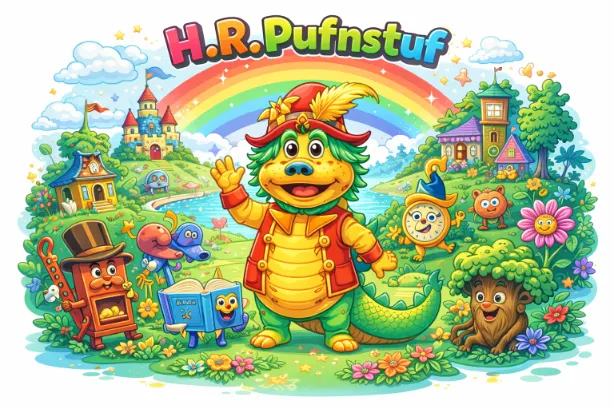
The visual design connected with “Pufnstuf” strengthens its meaning. Bright colors, oversized costumes, and exaggerated shapes create a sense of wonder. The character’s dragon-like form mixes friendliness with fantasy, making it approachable rather than intimidating.
This visual style communicates:
- Creativity without limits
- A break from ordinary reality
- A child-focused perspective
The name “Pufnstuf” aligns perfectly with this aesthetic. It sounds as unusual as the world it represents.
Linguistic Style and Sound Appeal
“Pufnstuf” stands out because of its phonetic rhythm. The repetition of soft consonants and rounded vowels gives it a musical quality. This plays a strong role in memory retention, especially for younger audiences.
Key linguistic traits:
- Alliteration-like sound flow
- Soft consonants (P, F, S) that create a gentle tone
- Balanced syllables that make it easy to pronounce
This structure turns the word into something playful rather than complex. It feels natural to say, even though it does not follow standard vocabulary patterns.
Meaning in Modern Context
Today, “Pufnstuf” extends beyond its original show. People use it to describe anything whimsical, surreal, or slightly absurd. The word can act as a reference point for imaginative environments or retro fantasy aesthetics.
Modern interpretations:
- A symbol of vintage children’s entertainment
- A shorthand for psychedelic or surreal visuals
- A nostalgic reference for audiences familiar with classic TV
The meaning adapts over time, yet it always retains its connection to creativity and fantasy.
Key Characteristics of “Pufnstuf”
| Aspect | Description |
|---|---|
| Origin | Children’s television (late 1960s) |
| Type | Fictional name with no dictionary base |
| Tone | Playful, imaginative, whimsical |
| Usage | Cultural reference, nostalgic term |
| Sound Pattern | Rhythmic and memorable |
| Symbolism | Creativity, leadership, fantasy escape |
Why the Name Feels Unique
“Pufnstuf” does not follow traditional naming conventions. That uniqueness plays a major role in its identity. The word avoids direct meaning, allowing it to carry flexible interpretations.
Reasons behind its uniqueness:
- No strict linguistic origin
- Designed for emotional and sensory appeal
- Connected strongly to visual storytelling
This flexibility allows the term to remain relevant even decades after its creation.
Role in Children’s Entertainment
During its time, “Pufnstuf” shaped a new direction in children’s programming. It introduced surreal environments and imaginative storytelling that differed from standard formats.
Key elements that defined its role:
- Use of puppetry and costume characters
- Bright, exaggerated visual design
- Fantasy-driven narratives
The name itself became a central part of that identity. It acted as both a character name and a symbol of the entire world within the show.
Emotional Connection and Nostalgia
For many viewers, “Pufnstuf” carries emotional weight tied to childhood memories. The name triggers recollections of colorful scenes, musical moments, and imaginative adventures.
This emotional connection forms through:
- Repetition during formative years
- Strong visual and auditory associations
- Distinctive character design
The word transforms from a simple name into a memory trigger.
Uses of the Term Today
People may use “Pufnstuf” in casual conversation or creative contexts to describe something unusual or imaginative.
Examples of usage:
- Describing a surreal art style
- Referring to retro children’s media
- Labeling something whimsical or exaggerated
The flexibility of the word allows it to adapt without losing its original charm.
What does “Pufnstuf” mean?
“Pufnstuf” refers to a fictional character and concept from a children’s television series. The word represents imagination, fantasy, and playful creativity rather than a fixed definition.
Is “Pufnstuf” a real word?
No, it does not appear in standard dictionaries. Creators designed it as a unique name for entertainment purposes.
Where did “Pufnstuf” originate?
The term originated from the television show H.R. Pufnstuf in the late 1960s.
Why does the word sound unusual?
Its creators combined playful sounds and syllables to create a memorable and rhythmic name that appeals to children.
How do people use “Pufnstuf” today?
People use it as a reference to whimsical, surreal, or nostalgic concepts linked to fantasy and retro media.