
Tapping the helmet in baseball carries a simple yet powerful message. Players use this gesture to communicate quickly without speaking, keeping the game smooth and focused. A tap on the helmet usually signals awareness, appreciation, or a specific instruction depending on the moment.
This small motion may look casual, yet it holds clear intent within baseball culture. Players, coaches, and even fans interpret it based on timing and context.
What Does Tapping the Helmet Mean?
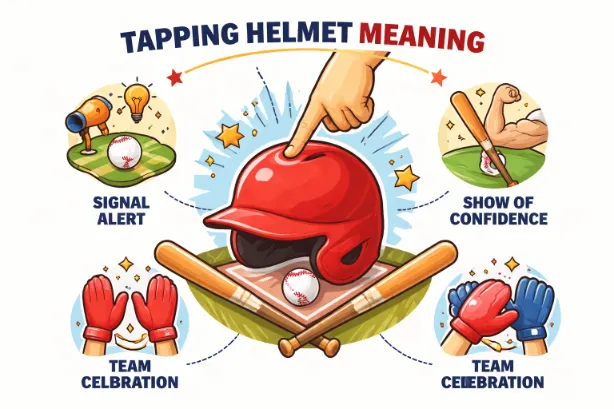
In most situations, tapping the helmet shows acknowledgment or a signal of gratitude. A batter, runner, or teammate uses it to say “I see you” or “good job” without interrupting play.
Here are the most common meanings:
- A runner taps their helmet to thank a teammate for a good hit
- A player acknowledges a coach’s signal
- A batter signals readiness or awareness
- A player responds to crowd support or dugout encouragement
The meaning stays rooted in communication without words, keeping attention on the game.
Why Players Use Helmet Tapping
Baseball depends heavily on non-verbal communication. Noise, distance, and pace make spoken words unreliable during live action.
Helmet tapping solves this by being:
- Quick – takes less than a second
- Clear – easy to notice from far away
- Silent – no disruption to gameplay
- Universal – widely accepted across levels
Players rely on gestures like this to stay connected during intense moments.
Situations Where Helmet Tapping Appears
The gesture shows up in different parts of a game. Each moment slightly changes the meaning, though the core idea stays consistent.
During Base Running
A runner reaching base safely may tap their helmet toward the dugout or batter.
- Shows appreciation for a solid hit
- Acknowledges coaching guidance
- Signals awareness of the play
After a Big Hit
A batter who drives in runs might tap their helmet toward teammates.
- Celebrates teamwork
- Recognizes shared effort
- Builds positive energy
Responding to Coaches
Players receive signs from base coaches or dugout staff.
- A helmet tap confirms the signal
- Shows readiness for the next move
- Keeps communication smooth
Dugout Interaction
Players inside the dugout use gestures too.
- Encouragement toward teammates
- Silent communication across distance
- Reinforces team chemistry
| Situation | Meaning | Purpose |
|---|---|---|
| Runner reaches base | Appreciation | Acknowledge teammate effort |
| Batter after hit | Team recognition | Build morale |
| Coach gives signal | Confirmation | Maintain coordination |
| Dugout communication | Support or awareness | Strengthen teamwork |
How It Differs From Other Baseball Gestures
Baseball features many hand signals and gestures. Helmet tapping stands apart due to its simplicity.
- Hand signs from coaches carry strategic instructions
- Clapping or pointing shows excitement or direction
- Helmet tapping focuses on acknowledgment rather than strategy
This distinction keeps communication organized. Players avoid confusion by using each gesture for a specific purpose.
Cultural Value in Baseball
Baseball carries a deep tradition of silent respect and teamwork. Helmet tapping fits naturally within that culture.
- Shows respect without distraction
- Keeps attention on performance
- Encourages teamwork over individual focus
Even at amateur levels, players adopt this gesture early. It becomes second nature as they progress.
Psychological Effect on Players
Small gestures influence mindset more than many realize. Helmet tapping creates positive reinforcement during a game.
- Builds confidence
- Strengthens connection among teammates
- Keeps emotions balanced
A player receiving acknowledgment feels supported, which can improve performance.
Youth Baseball and Helmet Tapping
Young players learn this gesture as part of basic baseball etiquette.
Coaches encourage it to:
- Teach sportsmanship
- Promote teamwork
- Develop awareness during play
It becomes a habit that carries into higher levels of competition.
Misinterpretations
People new to baseball may misunderstand helmet tapping.
Some may assume it signals strategy or confusion. In reality, it usually expresses acknowledgment rather than instruction.
Clarifying this helps viewers better enjoy the game and follow player interactions.
Differences Across Levels of Play
Helmet tapping appears in all forms of baseball, though intensity varies.
Amateur and Youth Leagues
- More frequent
- Used for encouragement
- Helps players stay connected
College Baseball
- More controlled
- Focused on awareness
- Used with clear intent
Professional Baseball
- Subtle and precise
- Often combined with other gestures
- Carries deeper meaning within team systems
Why Non-Verbal Communication Matters in Baseball
Baseball moves at a pace that demands quick reactions. Verbal communication cannot keep up during many moments.
Non-verbal signals like helmet tapping:
- Reduce confusion
- Save time
- Maintain focus
This system allows teams to operate smoothly even under pressure.
Role of Coaches in Encouraging This Gesture
Coaches play a major role in teaching and reinforcing helmet tapping.
They guide players to:
- Use it at the right moment
- Avoid overuse
- Keep gestures meaningful
Proper use enhances team coordination without creating distractions.
When Helmet Tapping Should Be Avoided
Though useful, players avoid using it in certain moments.
- During active play requiring full concentration
- In situations where signals may confuse teammates
- During critical defensive setups
Timing matters just as much as the gesture itself.
Helmet Tap vs Helmet Tip
These two actions may look similar but carry different meanings.
| Gesture | Meaning | Usage Context |
|---|---|---|
| Helmet Tap | Acknowledgment or thanks | Teammates and coaches |
| Helmet Tip | Respect or greeting | Fans or opponents |
Influence of Team Culture
Each team may develop slight variations in how gestures are used.
Some teams:
- Use helmet tapping frequently
- Combine it with other signals
- Add personal meaning within the group
This variation keeps the game unique across teams while maintaining a shared foundation.
Connection Between Gesture and Performance
Consistent communication improves coordination. Helmet tapping supports this by reinforcing awareness.
Players who communicate well:
- React faster
- Make better decisions
- Stay aligned with teammates
Even a small gesture contributes to overall performance.
Media and Fan Interpretation
Fans who follow baseball closely recognize helmet tapping easily.
For new viewers:
- It may look like a casual habit
- The deeper meaning becomes clear with experience
Broadcasters sometimes point it out during games, helping audiences learn its purpose.
Evolution of Baseball Communication
Baseball communication has changed over time, though core elements remain steady.
- Hand signals have evolved for strategy
- Technology supports coaching decisions
- Simple gestures like helmet tapping remain unchanged
This blend of tradition and modern elements keeps baseball unique.
Tapping the helmet carries more meaning than it appears at first glance. It connects players, supports teamwork, and keeps communication smooth during fast-paced moments.
This gesture stands as a quiet yet powerful part of baseball culture. Players rely on it to express awareness, appreciation, and readiness without breaking focus.
Even though it takes only a second, it strengthens the rhythm of the game and reinforces the connection between teammates on the field.