
“Taquer” appears as a shortened or informal variation of the word tied to taco culture, commonly linked to a taco maker or a place connected with tacos. In many contexts, people use it casually to refer to someone who prepares tacos or a spot centered on taco cuisine. The roots trace back to Mexico’s street food traditions, where tacos hold a central place in everyday meals.
Origin and Linguistic Background
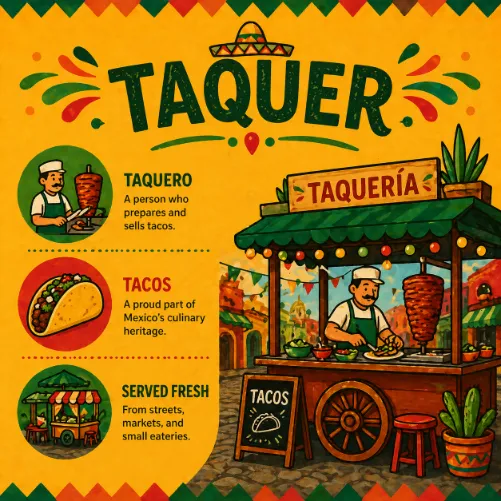
The term connects closely with the Spanish word “taquero, which describes a person who prepares and sells tacos. Tacos themselves belong to the culinary heritage of Mexico, where vendors serve them fresh on streets, in markets, and in small eateries.
Language evolves through usage. Shortened forms like “taquer” emerge in digital spaces, slang, or branding. While not formally listed in traditional dictionaries, the meaning stays rooted in taco culture.
Role in Food Culture
Taco preparation requires skill, speed, and flavor balance. A taquer (or taquero) manages multiple tasks at once grilling meat, warming tortillas, and assembling toppings with precision.
Elements in Taco Preparation
- Fresh tortillas made from corn or flour
- Marinated meats such as beef, chicken, or pork
- Toppings like onions, cilantro, and salsa
- Lime for acidity and freshness
Street vendors in cities like Mexico City serve tacos quickly, often within seconds. That speed defines the culture surrounding taco preparation.
Types of Tacos a “Taquer Prepares
Different taco styles shape the identity of a “taquer. Each type brings its own flavor and preparation method.
Popular Taco Varieties
| Taco Type | Main Ingredient | Flavor Profile |
|---|---|---|
| Tacos al Pastor | Marinated pork | Sweet and smoky |
| Carne Asada | Grilled beef | Savory and charred |
| Pollo | Chicken | Light and spiced |
| Barbacoa | Slow-cooked meat | Rich and tender |
| Fish Tacos | Fried or grilled fish | Fresh and tangy |
These varieties reflect regional diversity across Mexico.
Daily Life of a “Taquer
A “taquer’s routine begins early. Preparation involves marinating meats, chopping vegetables, and preparing sauces. During busy hours, especially evenings, the pace becomes intense.
Key Responsibilities
- Maintain consistent flavor
- Handle multiple orders quickly
- Keep ingredients fresh
- Interact with customers
Skill grows with experience. Many “taqueros train informally, learning techniques from family members or mentors.
Cultural Value
Tacos represent more than food. They connect communities and traditions. A “taquer acts as a bridge between heritage and daily life.
Street taco stands create social spaces. People gather, eat, and interact. This environment strengthens cultural identity.
Business Perspective
Running a taco-focused setup requires planning and efficiency. Whether a street cart or a full restaurant, the fundamentals remain similar.
Basic Setup Components
- Cooking equipment (grill, burners)
- Ingredient sourcing
- Pricing strategy
- Location selection
Urban areas tend to attract more customers due to higher foot traffic.
Global Expansion
Taco culture has expanded far beyond Mexico. Cities across the world now feature taco vendors and restaurants. In places like Los Angeles and London, taco spots attract diverse audiences.
This expansion introduces fusion styles, combining local ingredients with traditional recipes.
Skills Required
A successful “taquer develops multiple abilities:
- Fast hand coordination
- Strong sense of taste
- Heat management while cooking
- Customer communication
Consistency separates an average cook from an experienced one.
Challenges in the Field
Running a taco operation brings daily challenges:
- Ingredient cost fluctuations
- Competition from other vendors
- Maintaining hygiene standards
- Handling long working hours
Despite these challenges, many continue due to passion for food and culture.
Modern Trends
Digital platforms influence how people discover taco spots. Social media helps small vendors reach wider audiences. Creative presentation and unique flavors attract attention.
Fusion tacos, vegan options, and gourmet variations appear in modern menus. These trends reshape traditional approaches while maintaining core elements.
Nutrition and Ingredients
Tacos can range from simple street food to balanced meals. Nutritional value depends on ingredients and preparation.
| Component | Benefit |
|---|---|
| Protein (meat/beans) | Muscle support |
| Vegetables | Vitamins and fiber |
| Tortilla | Energy source |
| Salsa | Low-calorie flavor |
Balanced combinations create healthier options.
Why the Term “Taquer” Appears Online
Online content, branding, and casual language usage encourage shorter words. “Taquer” may appear in usernames, business names, or hashtags. It keeps the connection to tacos while offering a modern, simple form.
Taco culture continues to expand globally. Innovation blends with tradition, creating new styles while respecting origins. The role of a “taquer remains central in maintaining authenticity.
What does “taquer” mean?
It refers to someone associated with taco preparation or taco-based food culture.
Is “taquer” the same as “taquero”?
“Taquero” is the correct Spanish term, while “taquer” acts as a shortened or informal variation.
What skills does a “taquer need?
Speed, cooking accuracy, flavor balance, and customer interaction.
Where did taco culture originate?
It began in Mexico, where tacos form a major part of everyday meals.
Can tacos be healthy?
Yes, using fresh ingredients, lean proteins, and vegetables improves nutritional value.
Why are tacos popular worldwide?
They are versatile, affordable, and easy to customize.