
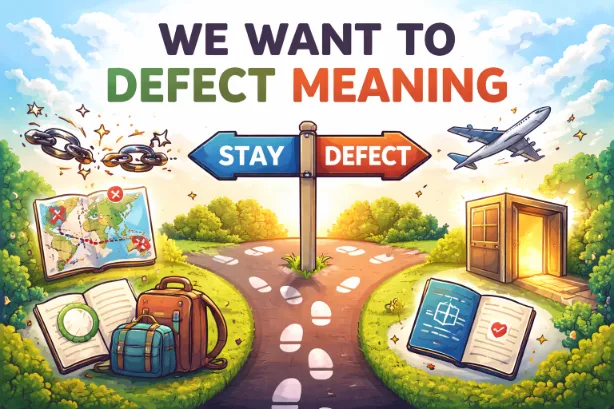
“We want to defect” expresses a clear group intention to leave one side and join another. The phrase carries emotional weight and signals dissatisfaction, disagreement, or a desire for better conditions. It may appear in political, professional, or casual settings, and the tone shifts based on the situation.
What Does “Defect” Mean?
The word defect refers to abandoning loyalty and switching to a different side. It often appears in serious discussions, especially in political or military environments, but people also use it in everyday language.
In simple terms, defection means leaving one position, belief system, or group and choosing another path. The action involves intention and usually follows dissatisfaction.
Examples of basic usage:
- A soldier leaves one army and joins another
- A politician leaves their party to join a rival
- An employee switches to a competing company
Each case shows a shift in loyalty, which forms the core idea behind defection.
Meaning of “We Want to Defect”
The phrase “we want to defect” highlights a collective decision. It shows that multiple people share the same intention and plan to move together.
This statement often appears at moments of change. A group reaches a point where staying no longer feels right, and moving elsewhere seems like the better option. The phrase signals planning, agreement, and a turning point.
Key elements of the phrase:
- “We” shows unity and group involvement
- “Want” expresses intention or desire
- “To defect” shows the action of switching sides
Together, the phrase means a group plans to leave their current position and join another.
Contexts Where the Phrase Appears
Political Context
In politics, this phrase carries serious weight. It may involve citizens leaving a country or leaders switching parties. These actions can affect governance and public opinion.
People may use this phrase in political settings due to lack of freedom, disagreement with leadership, or dissatisfaction with policies. The consequences can be severe, which makes the decision more intense.
Military Context
In military situations, defection involves high risk. Soldiers or officers may leave their side during conflict and join another force.
This decision may result from safety concerns, moral disagreements, or better treatment elsewhere. Such actions can influence outcomes in major conflicts.
Workplace Context
In professional environments, the phrase appears in a less intense way. Employees or teams may leave one company and move to another for better opportunities.
This type of defection shows dissatisfaction with working conditions, salary, or growth opportunities. It reflects a practical decision rather than a life-threatening one.
Social or Casual Context
In informal conversations, people use the phrase in a lighter tone. Friends or group members may say it jokingly or casually.
For example, a group may decide to switch teams in a game or move to another social circle. In this setting, the phrase carries minimal seriousness.
| Phrase Part | Meaning |
|---|---|
| We | A group of people |
| Want | Desire or intention |
| To defect | Leave one side and join another |
This breakdown shows that the phrase combines intention with action, making it powerful and direct.
Emotional Tone Behind the Phrase
The phrase carries different emotions depending on the context. In serious situations, it may reflect deep frustration or disappointment. In lighter settings, it may sound playful.
People who use this phrase often feel a strong need for change. They may experience a mix of hope and uncertainty, especially in high-risk situations.
Common emotions linked to defection:
- Frustration with current conditions
- Desire for freedom
- Hope for improvement
- Fear of consequences
- Determination to move forward
These emotions shape the meaning and intensity of the phrase.
Examples in Sentences
Real-life sentences help clarify how the phrase works in communication. Each example shows a shift in loyalty or direction.
- “We want to defect because we disagree with the leadership.”
- “During discussions, they clearly said, ‘we want to defect.’”
- “The team announced that they want to defect to a rival company.”
These examples show how the phrase communicates intention and action together.
Why People Choose to Defect
People rarely make such decisions without strong reasons. The choice usually develops after ongoing dissatisfaction.
Many individuals or groups reach a point where staying feels limiting, and moving offers better prospects. This decision involves both emotional and practical thinking.
Main reasons behind defection:
- Lack of freedom or rights
- Poor working conditions
- Better opportunities elsewhere
- Disagreement with leadership
- Safety concerns
Additional motivations:
- Financial growth
- Personal development
- Ethical differences
- Family considerations
Each reason contributes to the final decision.
Risks Linked with Defection
Defection can lead to serious consequences, especially in political or military settings. People may face legal or social challenges after making this move.
The level of risk depends on the situation. In some cases, it may involve personal danger or long-term consequences.
Possible risks:
- Legal penalties
- Loss of identity or status
- Social rejection
- Safety threats
- Emotional stress
These risks explain why defection requires careful thought.
Benefits of Defection
Despite the risks, many people see potential advantages in switching sides. They believe the change can improve their lives.
Defection may open doors to new opportunities and better conditions. It often represents hope for a more satisfying future.
Possible benefits:
- Greater freedom
- Improved lifestyle
- Career advancement
- Personal satisfaction
- Access to better opportunities
These benefits motivate people to take the risk.
Difference Between Defect and Migrate
| Term | Meaning | Nature |
|---|---|---|
| Defect | Leave one side due to dissatisfaction | Emotional and intentional |
| Migrate | Move to another place for living or work | Neutral and practical |
Defection involves a stronger emotional shift compared to migration.
Synonyms of Defect
Several words carry similar meanings, though each has a slightly different tone.
- Desert
- Switch sides
- Abandon
- Break away
- Leave
These alternatives can replace “defect” depending on the sentence.
Psychological Aspect of Group Decisions
Group decisions like “we want to defect” develop through shared experiences. People feel stronger and more confident acting together.
Discussions, trust, and shared goals play a major role. A group may encourage each other to take action, which makes the decision more solid.
Working as a unit reduces fear and increases confidence in the outcome.
Modern Usage
The phrase remains relevant in modern communication. It appears in workplaces, politics, and even online communities.
People use it to express dissatisfaction and a desire for change. Its meaning stays consistent, though the intensity varies by context.
Context vs Meaning Strength
| Context | Strength of Meaning |
|---|---|
| Political | Very strong |
| Military | Extremely strong |
| Workplace | Moderate |
| Casual | Light |
What does “we want to defect” mean in simple words?
It means a group plans to leave their current side and join another.
Is defection always serious?
No. It can be serious in politics or military settings, but casual in everyday conversations.
Why do people defect?
People defect due to dissatisfaction, better opportunities, or safety concerns.
Is defection risky?
Yes, especially in high-stakes environments where consequences can be severe.
Can defection lead to better outcomes?
Yes. Many people choose it to improve their lives or gain freedom.